Swiss Regional Economic Commentary 3rd Quarter 2026
Broad-based growth in the second quarter of 2026 – but not all regions are keeping pace
Strong GDP growth in the second quarter 2026 despite an uncertain environment
The nowcast estimate from the Swiss REco Index suggests that Switzerland’s gross domestic product (GDP) grew significantly in the second quarter of 2026. Following a moderate growth rate of 1.2 % in the first quarter, the pace of growth accelerated to around 2.8 % in the second quarter. On a monthly basis, strong growth was recorded in April (2.3 %), May (3.2 %) and June (2.8 %) compared with the corresponding months of the previous year. Part of this momentum is attributable to base effects, as the comparative figures for April and May 2025 in particular were low. Nevertheless, the Swiss REco Index suggests that the Swiss economy continued to perform robustly in the second quarter of 2026, despite geopolitical uncertainties.
Other timely economic indicators paint a similar, though not identical, picture for the second quarter:
- SECO Index of weekly economic activity: The latest SECO data up to calendar week 25 show a marked recovery in May and June following very weak figures in April. On average, however, the SECO Index for the second quarter stands at 1.7 %, which is lower and significantly more volatile than the Swiss REco Index.
- KOF Business Climate Indicator: The KOF Business Climate Indicator also points to a fundamentally robust but fragile economic situation. Following a marked improvement in April, the business climate deteriorated slightly again in May and June. The majority of companies continue to assess their current situation positively and as better than in the second quarter of 2025.
Share article
Lucerne and Aargau lead the way, whilst Geneva and Zurich lag behind In almost all cantons, the growth rate in
In almost all cantons, the growth rate in the second quarter was higher than that of the first quarter. Economic growth was particularly strong in the second quarter in the cantons of Zug, Lucerne, Aargau and Bern. Zug stands out clearly with average growth of just under 5.0 %, which is well above the Swiss average of 2.8 %. Lucerne, Aargau and Bern also recorded above-average growth of around 3.4 %, 3.1 % and 3.0 % respectively.
By contrast, growth in several cantons remained well below the Swiss average. Figures for the second quarter were particularly low in Geneva, Jura and Neuchâtel. Zurich and Vaud also recorded only below-average growth. The picture among the major cantons is therefore mixed: whilst Bern has clearly gained momentum, Zurich remains relatively weak despite an improvement on the first quarter. Vaud is also showing signs of recovery, but at around 1.7 % in the second quarter, it remains well below the Swiss average.
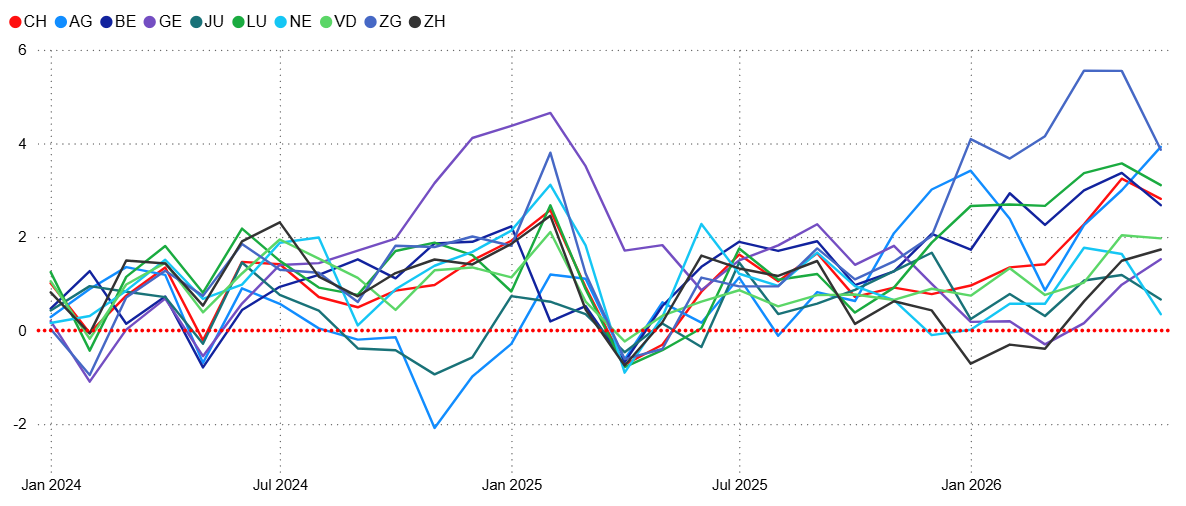
Figure 1: Growth rate of the Swiss REco Index in selected cantons
(compared to the same month last year, in percent)
Machinery exports: Differing trends in the two industrial cantons of Aargau and St. Gallen The cantons
The cantons of Aargau and St. Gallen both have strong machinery industries with high export shares. In the canton of Aargau, machinery manufacturing accounts for around 15 % of exports, whilst in the canton of St. Gallen the figure is as high as around 30 %. In real terms, the export volumes of the machinery industry in both cantons are roughly comparable.
Despite this similar starting point, the trend in real machinery exports shows a marked difference. In the canton of Aargau, the high figures recorded in 2024 were, in some cases, already matched again in 2025. By May 2026, exports were in some cases even higher than the figures for the corresponding months of the previous year.
The situation is different in the canton of St. Gallen. There, the monthly figures for 2024 were not matched in 2025. Furthermore, in 2026, the figures from March to May are significantly below the corresponding monthly figures for 2024 and, in some cases, even below the low levels recorded in 2025.
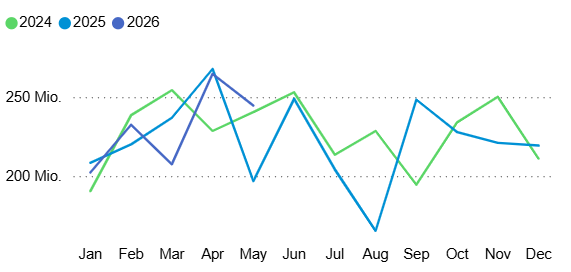
Figure 2a: Actual exports of machinery from the canton of Aargau
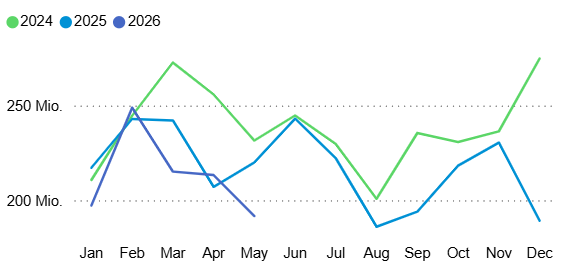
Figure 2b: Actual exports of machinery from the canton of St. Gallen
The economic recovery is only slowly becoming apparent in the labour market – with a setback in June
One example of this is the trend in the number of jobseekers in the industrial sector in the Canton of Bern. This figure has been falling since the start of 2026. One reason for this is that the influx of new jobseekers from the industrial sector in the Canton of Bern and in many other cantons has fallen significantly. At the same time, more jobseekers from the industrial sector are finding work again.
Online job advertisements also showed growth in April and May compared with the same months last year for the first time in a long while (see Figure 4). This upward trend is particularly pronounced in the cantons of Zug and Lucerne. In St Gallen and Vaud, however, growth
is only slight.
However, the data for June calls for caution. Compared with June 2025, there has been a slight to significant decline, depending on the canton. The next set of figures will show whether this is merely a temporary setback or whether the recovery is already losing momentum again.
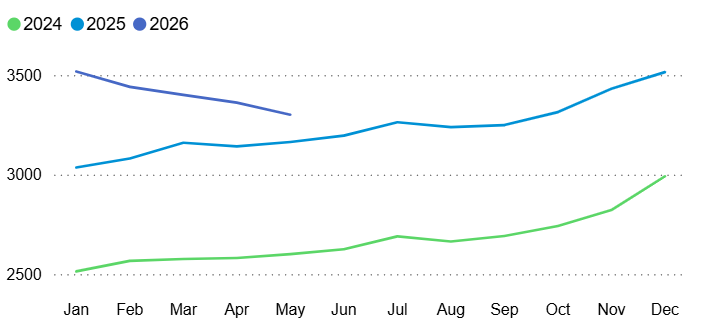
Figure 3: Jobseekers from the industrial sector in the canton of Bern
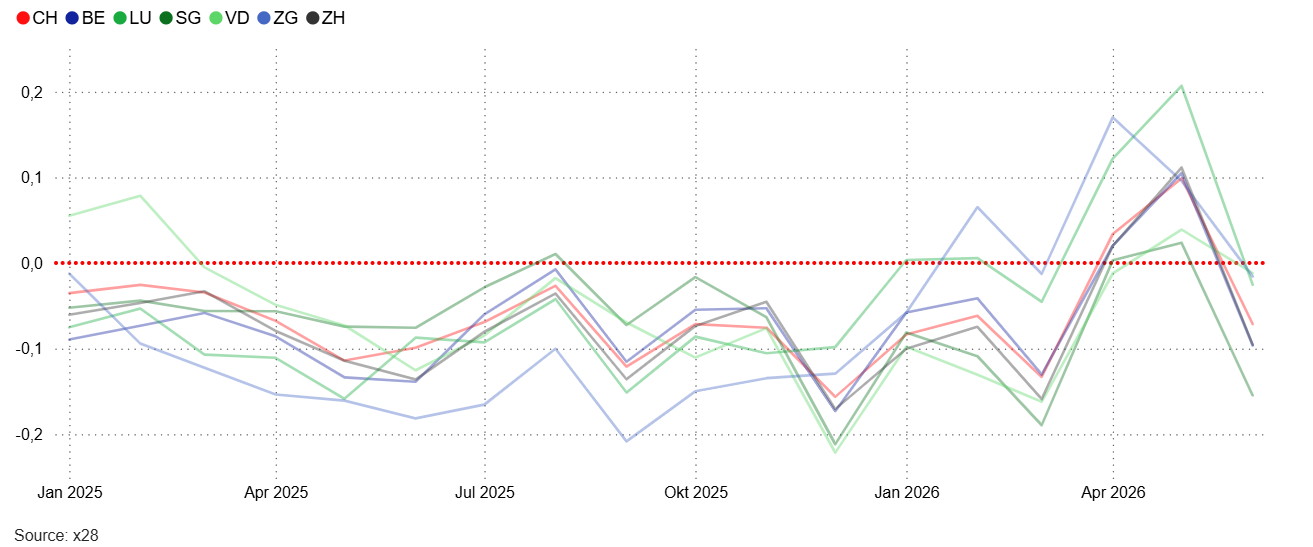
Figure 4: Growth rate of job advertisements in selected cantons
(compared to the same month last year, in percent)
Make an appointment now
Josua Burkart
Managing Partner
hpo forecasting ag

What is Swiss REco?
The Swiss Regional Economic (Swiss REco) Dashboard is a collection of continuously updated real-time data on economic development in the individual cantons of Switzerland. It was developed by Prof. Dr Peter Moser and Dr Adhurim Haxhimusa from the Centre for Economic Policy Research at the University of Applied Sciences of the Grisons (FHGR) and has been distributed exclusively by hpo forecasting ag since 2024.
The information portal is a powerful tool for institutions that need to be informed promptly about economic developments in their regions. At the heart of the dashboard is the Swiss Regional Economic Index, a well-founded estimate of current economic growth, specific to each canton in Switzerland.