Swiss Regional Economic Commentary 4th Quarter 2026
Economic activity slows in the third quarter – significant regional differences
Economic growth loses significant momentum in the third quarter
The Swiss REco Index’s nowcast estimate suggests that growth in the Swiss economy slowed significantly in the third quarter of 2026. Following strong growth of 2.6 per cent year-on-year in the second quarter, monthly growth rates in the third quarter were considerably lower. In July and August, according to the Swiss REco Index, Swiss GDP still grew by 0.8 per cent compared with the same month a year earlier. For September, the current estimate even points to a slightly negative figure (–0.3 per cent). Overall, this results in growth of only around 0.4 per cent for the third quarter. The strong surge in growth seen in the spring has therefore not continued.
Other recent economic indicators paint a slightly more favourable picture:
- SECO Weekly Economic Activity (WEA) Index: The WEA Index also points to positive growth in economic activity in the third quarter. The data available up to calendar week 37 suggest growth of around 2 per cent. However, the figures for the last four weeks available, up to mid-September, have fallen significantly to below 1 per cent.
- KOF Business Climate Indicator: By contrast, the KOF’s business surveys show a further improvement over the summer. The Business Climate Indicator rose in July and August and stabilised at this high level in September. As a result, companies’ assessment of their situation is now more positive than it has been since mid-2023. The situation developed particularly favourably in the wholesale trade, the construction sector, the services sector and the manufacturing sector.
Overall, this paints a somewhat contradictory picture: the nowcast indicators based on real-time data – the Swiss REco Index and, most recently, the SECO Weekly Index – point to a slowdown in economic momentum. By contrast, the KOF Business Climate Indicator, as a sentiment indicator, continues to signal a positive trend and a comparatively optimistic assessment of the current business climate.
Share article
Marked differences between cantons in the third quarter of 2026
In the third quarter of 2026, the Swiss REco Index shows an increasingly divergent trend across the cantons. Basel-Stadt, Fribourg and Neuchâtel are performing particularly poorly. In all three cantons, growth momentum has weakened significantly since the spring; overall, GDP contracted in the third quarter. In Basel-Stadt, the Swiss REco Index slipped significantly into negative territory in September; this resulted in a 0.6 per cent decline in GDP for the third quarter. Fribourg has recorded negative growth rates since August, and GDP contracted by 0.4 per cent in the third quarter. In Neuchâtel, the decline was even steeper at 1.1 per cent. In these cantons, the Swiss REco Index thus points to a noticeable economic slowdown.
By contrast, Graubünden, Obwalden and Zug continue to show comparatively robust performance. Graubünden recorded consistently strong positive growth rates in the third quarter, achieving overall growth of 2.1 per cent. This places the canton among the stronger regions. Obwalden, too, continues to show solid growth of 1.5 per cent, albeit with slowing momentum. Zug is performing particularly well: following exceptionally high growth rates in the second quarter, growth remained clearly positive in the third quarter at 2.5 per cent.
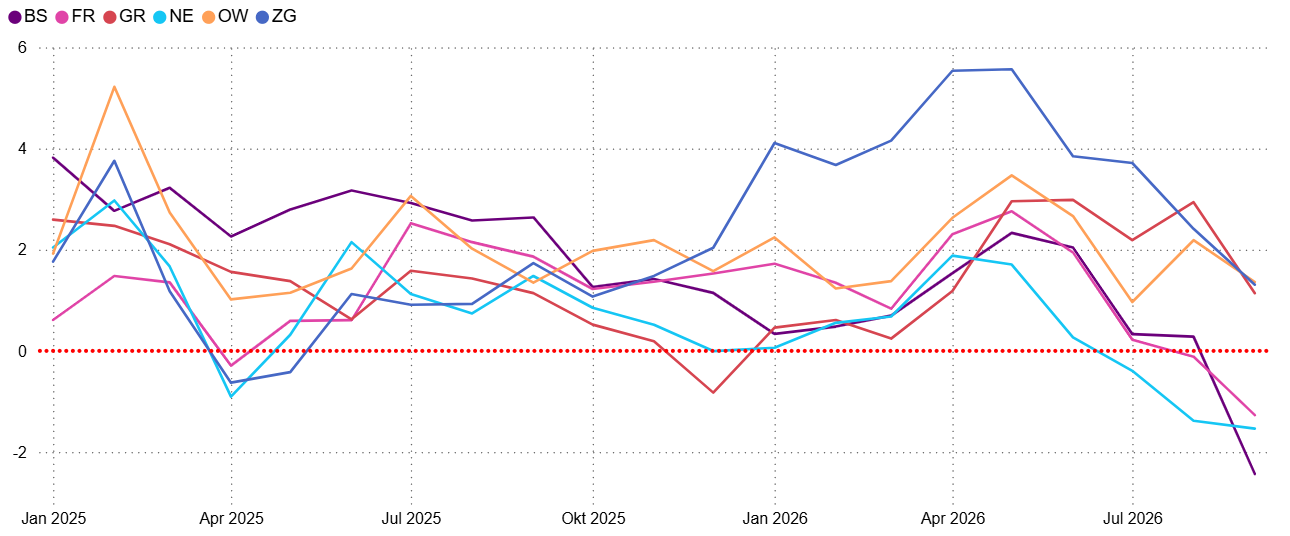
Figure 1: Growth rate of the Swiss REco Index in selected cantons
(compared to the same month last year, in percent)
Tourism: Graubünden and Valais are benefiting from strong domestic demand
In 2026, overnight stays are developing differently across the major tourist cantons. Graubünden stands out as particularly positive: overnight stays from April to July were significantly higher than the corresponding figures for the previous year. In July, growth even exceeded 10 per cent. The Valais has also shown a predominantly positive trend since the spring, albeit less pronounced than in Graubünden. By contrast, overnight stays in Bern and Zurich have been weaker and, in several months, were below the previous year’s level.
A closer look at Valais reveals the source of this positive trend. Swiss guests, as the largest guest group, are particularly important: since the spring, their overnight stays have once again been consistently above the corresponding figures from the previous year. Demand from key neighbouring countries is also developing favourably. Overnight stays by German guests rose particularly in May and July, whilst guests from France recorded growth rates that were in some cases in double figures during the second quarter.
Possible reasons for this trend include, amongst other things, the very warm summer, which is likely to have further boosted Alpine tourism. At the same time, geopolitical uncertainties may have contributed to certain travellers favouring closer destinations.
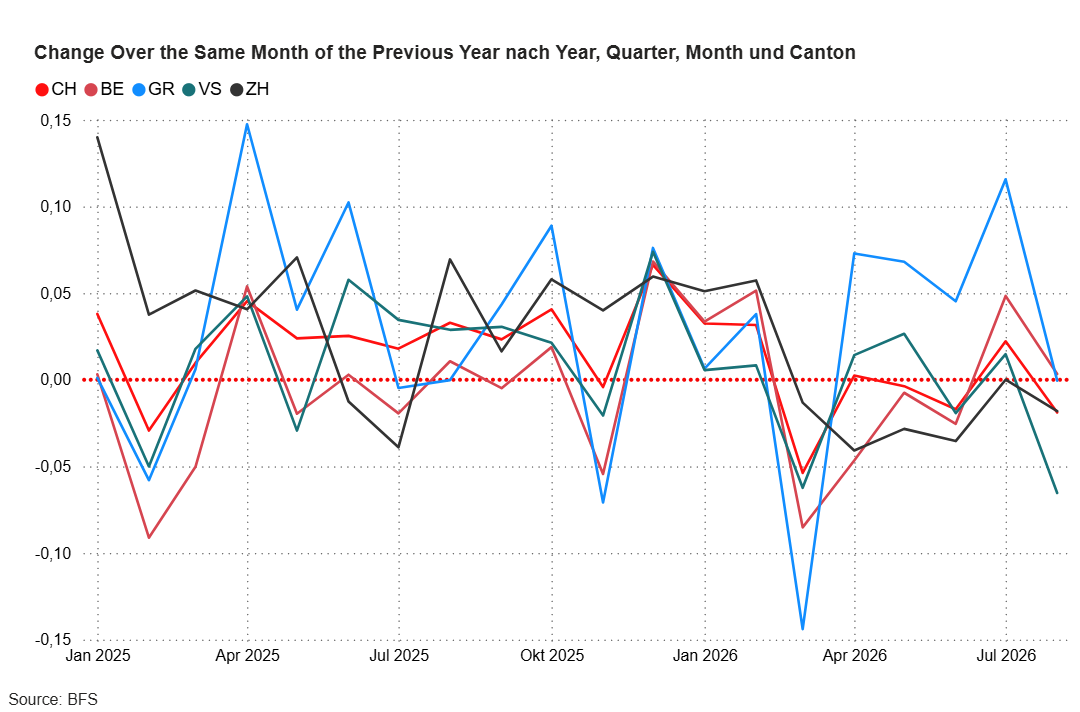
Figure 2a: Trend in overnight stays in selected cantons
(as a percentage compared with the same month of the previous year)
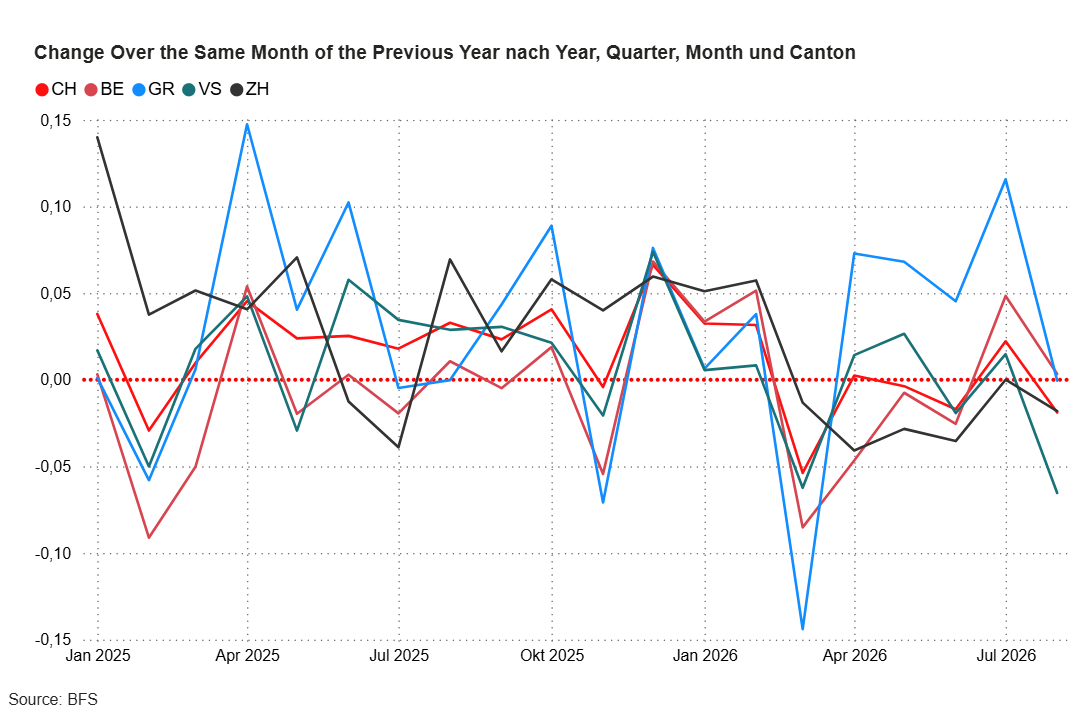
Figure 2b: Trend in the number of overnight stays in the canton of Valais by selected countries of origin
(as a percentage compared with the same month of the previous year)
Differences in export trends between the cantons of Zug and Basel-Stadt
One possible reason for the differing trends in the Swiss REco Index in Zug and Basel-Stadt lies in export performance. In the canton of Zug, real exports in 2026 are, on the whole, holding steady. Following a weaker start to the year, export figures in the spring and summer were once again close to, and in some cases above, the previous year’s levels. This is consistent with the canton’s continued robust economic performance.
The situation is different in Basel-Stadt. There, real exports in 2026 are significantly below the figures for 2024 and 2025 in most months. Although there was some recovery in August, the overall level of exports remains clearly lower. Given the high export orientation of Basel’s economy, this weakness is likely to have contributed to the negative performance of the Swiss REco Index in the third quarter.
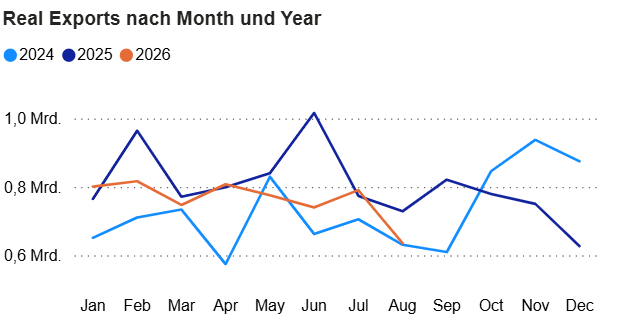
Figure 3a: Real exports from the canton of Zug
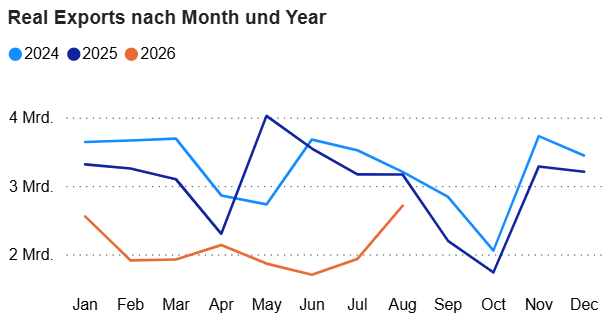
Figure 3b: Real exports from the canton of Basel-Stadt
Jobseekers in Zug and Zurich: a particularly sharp rise among the highly qualified in Zug
The labour markets in the cantons of Zug and Zurich are geographically close to one another and have very similar unemployment rates of 2.85 per cent and 2.95 per cent respectively. At the same time, the number of jobseekers in both cantons is significantly higher than in the previous year.
The trend is particularly striking among those with a tertiary education qualification. In the canton of Zug, their number in recent months is around 80 per cent higher than the corresponding figures for 2025. An increase can also be observed in Zurich, although at around 20 per cent it is considerably smaller.
This is particularly noteworthy for Zug: Despite strong economic performance and high growth rates in the Swiss REco Index, the labour market situation for highly qualified individuals has deteriorated significantly. The positive macroeconomic trend has therefore not yet been reflected in all segments of the labour market. Zug is currently seeing a particularly sharp rise in the number of jobseekers, especially amongst those with tertiary qualifications.
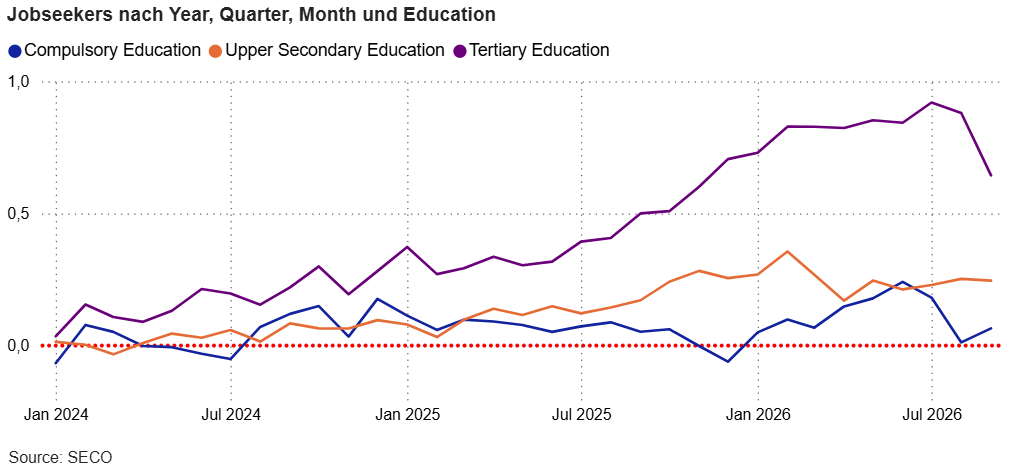
Figure 4a: Growth rate of jobseekers in the canton of Zug by level of education
(as a percentage compared with the same month of the previous year)
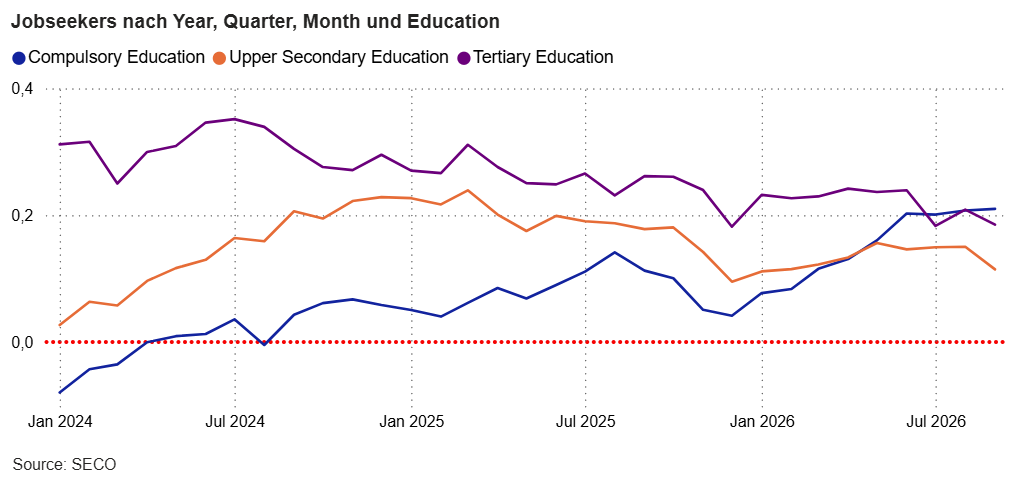
Figure 4b: Growth rate of jobseekers in the canton of Zurich by level of education
(as a percentage compared with the same month of the previous year)
Make an appointment now
Josua Burkart
Managing Partner
hpo forecasting ag

What is Swiss REco?
The Swiss Regional Economic (Swiss REco) Dashboard is a collection of continuously updated real-time data on economic development in the individual cantons of Switzerland. It was developed by Prof. Dr Peter Moser and Dr Adhurim Haxhimusa from the Centre for Economic Policy Research at the University of Applied Sciences of the Grisons (FHGR) and has been distributed exclusively by hpo forecasting ag since 2024.
The information portal is a powerful tool for institutions that need to be informed promptly about economic developments in their regions. At the heart of the dashboard is the Swiss Regional Economic Index, a well-founded estimate of current economic growth, specific to each canton in Switzerland.